Deploying Python models to production
summary
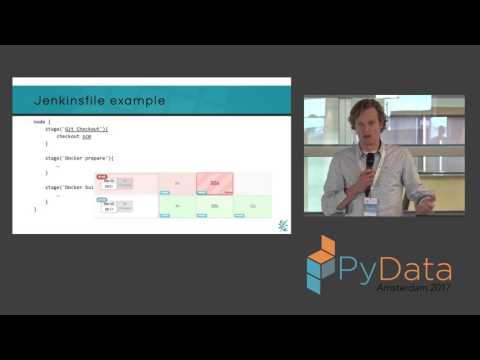
Deploys Pandas/Scikit models as Docker containers built by Jenkins pipelines, pushed to a registry and launched on Kubernetes with liveness/readiness probes and resource limits, using a shared framework that Flask, Docker, Kubernetes, Jenkins glue together and generates deployment templates. Models expose predictions over REST or Kafka bindings, reuse the same container across dev→test→accept→prod, follow a two‑week release cadence, and instrument with Heapster/Prometheus plus ELK/Kibana for logs and runtime monitoring.
AI-written summary · about
chapters (10)
- 0:00Data scientist to engineer
- 1:52Deployment process overview
- 3:41Code review and CI/CD
- 7:59Docker for dependencies
- 11:57Kubernetes orchestration
- 16:46Monitoring with Prometheus
- 18:09Deployment framework
- 22:53Multi-environment workflow
- 27:17Docker registry pipeline
- 30:54Post-deployment monitoring
related talks
 35mGetting Machine Learning Models Ready For Production Using Python
 46mDev Ops meets Data Science Taking models from prototype to production with Docker
 01h 02mDocker for Data Science: Reproducibility and Deployment
 41mRESTful Machine Learning with Flask and TensorFlow Serving
 46mProduction Model Deployment
 33mHow you really get your data science models into production the cool way!
 14mRobust R Deployments: Building a Pipeline from RStudio to Production
 57mDevOps for Machine Learning