Principals of System Integration
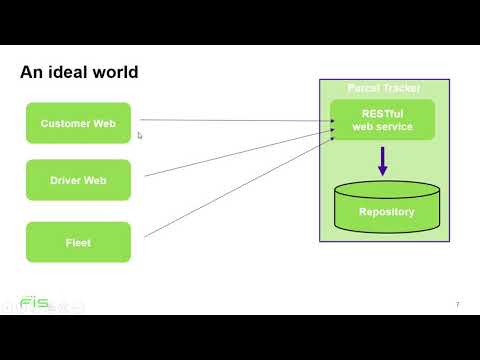
summary
Real systems often break in predictable ways and the talk gives concrete fixes: use a queue as store-and-forward (demo swaps REST for RabbitMQ so outages don’t drop messages), split processing into multiple small listeners instead of one monolith, prefer permissive schema acceptance to avoid field additions breaking production, and track message IDs/timestamps to handle duplicates and replay. Examples include a simulated outage that would have lost two weeks of delivery events, a new insurance field that caused validation failures, and fleet data changing from van GPS to aircraft registrations.
AI-written summary · about
chapters (18)
- 0:00Introduction and speaker background
- 3:23Why system integration is hard
- 10:26Enemy one reality and failures
- 11:30Store-and-forward queues explained
- 13:17Complexity and simplicity in design
- 15:27Handling change in interfaces
- 17:14Semantics and data meaning
- 19:44Team dynamics and ownership
- 20:47Key principles of integration
- 24:35No silver bullets in integration
- 25:18Q&A begins with permissive data schemas
- 27:10Dealing with unreliable partners
- 29:00RabbitMQ and logging capabilities
- 31:47Opinions and experience for developers
- 34:38Handling duplicate messages
- 36:24Readable data formats matter
- 37:25Conway's law and team structures
- 39:12Q&A concludes
related talks
 19mHow to Fail Your Event-Driven System
 47mEverything Loosely Coupled - Advanced Integration Patterns and Their Trade-Offs
 49mSystems playing nicely: Building resilient integrations in an unpredictable world
 41mDesign (Failures) Case Study
 01h 35mRedesigning Legacy Systems - Keys to Success / Lessons Learned
 01h 03mThe Language of the System
 01h 17mWhen Less Is More: Designing & Decoding Complex Distributed Systems
 30mHow Event Driven Architectures Go Wrong & How to Fix Them