Using Data to Protect Traditional Lifeways
summary
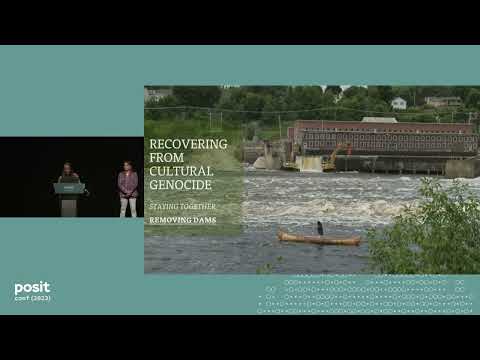
A tribal water program digitizes 15 years of field work: printing and scanning QR-coded bottle labels at ~134 sites May–Oct, logging chain-of-custody and processing in the lab with reproducible workflows. All statistical work runs in R analyses, including models to predict mercury in fish from watershed traits. Dam removals restore runs—annual river herring rise from virtually zero to an average of 2.5 million (over 5 million this year)—and data helped upgrade a reach from Class C to Class B and pass related legislation.
AI-written summary · about
chapters (8)
- 0:00Protecting traditional waterways
- 3:20Paperless data collection
- 8:19Indigenous knowledge vs Western science
- 10:04Dam removal and ecological recovery
- 13:14Mercury levels in fish tissue
- 14:38River classification upgrades
- 15:42Student outreach and education
- 17:11Braiding stories for healing
related talks
 39mWhen Rivers Speak Analyzing Massive Water Quality Datasets
 21mUsing open source software to map wildlife in the Northern Mariana Islands
 39mImproving delivery of safe water to African communities with
 52mDesigning data with a ‘post-infographic’ mindset
 28mData Science for Social Good: Making Impact in Resource-Constrained Environments
 21mBuilding sustainable communities through interaction
 26mFrom Data to Decision: Monitoring and Improving Water Networks using AI/ML
 19mMoving Through Country