Fireside chat

summary
Polkadot presents a WebAssembly-based meta-protocol under a mutating relay-layer that runs opinionated parachains and pay-as-you-go parathreads; lease slots win via retroactive “candle auctions.” Crowd loans lock DOTs on-chain (not transferred) for parachain leases. Governance votes auto-enact protocol changes to avoid hard forks. Security relies on extensive external audits, multi-implementation clients and a 1,000-validator push. Cross-chain bridges and asynchronous message passing target scalability and eventual cross-chain composability, with Kusama used as the real-value testbed.
AI-written summary · about
chapters (14)
- 0:00Start
- 5:15Webassembly
- 7:56From Bitcoin to Ethereum to Polka Dot
- 10:01Power Chains
- 28:04The Candle Auctions
- 30:19Candle Auctions
- 31:38Retroactive Ending
- 33:31How Do You Prevent Ddos Attacks on a Specific Parent Chain
- 38:48Crowd Loan
- 51:39Security Parity
- 58:38How Do You View Polka Dot as Coexisting with Ethereum
- 1:01:48The Parity Bridge
- 1:06:43Asynchronous Contract Calling
- 1:13:56The 1000 Validator Program of Polkadot
related talks
 27mAn Introduction to Polkadot and Parachains
 20mIntroduction to Polkadot
 13mPolkadot's Battle with Ethereum's Base Layer
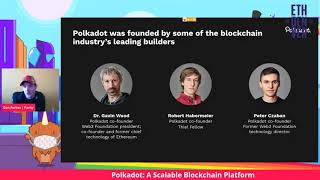 27mA Scalable Blockchain Platform
 52mA barstool chat
 01h 25mSubstrate: A Rustic Vision for Polkadot
 18mKeynote – Peter Mauric
 32mPolkadot Deep Dive: The Blockspace Ecosystem for Boundless Innovation