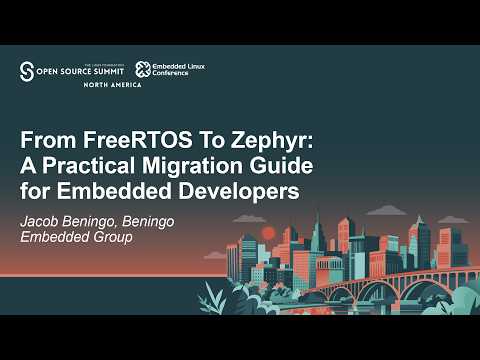
From FreeRTOS To Zephyr: A Practical Migration Guide for Embedded Developers
summary
Migrating from FreeRTOS to Zephyr follows six practical steps: analyze the FreeRTOS app, optionally add an OS abstraction, move to CMake/Ninja and a West manifest, author board descriptions with device tree author skill or by hand, port kernel objects (tasks, queues, semaphores, timers) and then integrate Zephyr subsystems. Key gotchas are priority reversed numbering, differing stack depth units, semaphore-vs-mutex types, and ISR APIs. Uses Kconfig, K_ APIs, Renode simulation and tested kernel ports; community-fixed performance improved Zephyr since earlier benchmarks.
AI-written summary · about
chapters (14)
- 0:00FreeRTOS to Zephyr migration intro
- 1:05Why migrate to Zephyr
- 8:46RTOS migration challenges
- 11:35Analyzing FreeRTOS apps
- 12:18Optional RTOS API layer
- 14:01Zephyr build system setup
- 16:49Zephyr project structure
- 17:53Device tree early config
- 23:08Porting FreeRTOS kernel objects
- 33:19Semaphores and mutexes differences
- 36:49Message queues vs event flags
- 38:59Interrupt handling differences
- 43:56Six-step migration summary
- 44:18Q&A
related talks
 40mHow to extract a bare metal flavor of code out of Zephyr to use in RTOS?
 24mMigrating an embedded systems lab to Zephyr: an experience report
 42mEnabling Zephyr on Your Hardware Platform
 27mZephyr RTOS as a role model in the operating systems theory education
 49mThe Zephyr™ Project – An Updated Overview
 45mLeveraging Zephyr RTOS for modern embedded systems: a perspective from education and research
 27mZephyr Porting Efforts in High Performance SoCs
 05mZephyr