How Machine Learning Can Help

summary
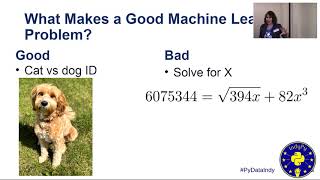
Covers four concrete ways to teach computers: explicit programs, supervised examples, reinforcement learning, and inferring intent; presents experiments and tools — 86% failure on averaging programs in an Ivy League class and 60% of online participants failed to describe a simple tabulation task, supervised models (vision and LLMs) reach high numbers but mislearn features — trained classifier ~98% accurate yet classifies huskies as wolves by using snow background — and an RL boat racer farms respawning points instead of racing; shows inverse RL, loss‑function learning, and a home‑automation pipeline that converts learned behavior into explicit rules for human review.
AI-written summary · about
chapters (12)
- 0:00Delegating to machines
- 1:58Human task conveyance
- 3:59Methods for programming computers
- 5:46Explicit instructions challenges
- 8:54Learning from examples
- 10:39Supervised learning limits
- 13:10Reinforcement learning goals
- 15:50Poor objectives dangers
- 17:38Demonstrating intent
- 19:00Combining AI methods
- 21:36Summary and future
- 22:19Q&A
related talks
 51mMachine Learning Exposed Introduction to Machine Learning
 49mML: Teaching machine to learn from its own mistakes (...)
 44mHow to Improve UX with Machine Learning: Insights and learnings until now
 45mApplied machine learning: a few lessons I learned the hard way
 12mTeaching computers how to learn
 42mMachine Learning Crash Course
 40mWhat is Machine Learning, and How Do I Get Started?
 31mLearning about AI from kids