Automatic Automotive Hacking
summary
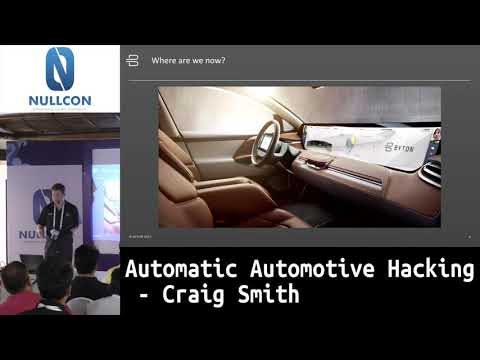
Shows an automated toolkit that does UDS emulation to mimic a car and reverse‑fuzz dealership diagnostic tools, plus passive CAN fingerprinting that identifies make/model by packet frequency. Describes leaking DBC files, a working GitHub tool for automatic signal mapping, and practical mitigations: secure gateways, blank ECUs, warranty‑voiding fuses, multi‑level certificates and escrow/multi‑sig unlock schemes. Demonstrates attack surfaces on a Byton prototype (USB power‑glitching, infotainment/OTA relay via gateway) and flags unresolved right‑to‑repair and aftermarket key‑management problems.
AI-written summary · about
chapters (7)
- 0:00Introduction and talk overview
- 3:15History of automotive hacking
- 10:55Security teams in automotive industry
- 15:48Right to repair and cloud security
- 23:32Solutions for secure modifications
- 31:59Threat modeling a modern vehicle
- 37:09Q&A and wrap-up
related talks
 36mCar Hacking
 41mPanel: Tackling Automotive Hardware Vulnerabilities
 58mA Survey of Remote Automotive Attack Surfaces
 51mSteering Clear of Danger: Decrypting the Realities of Remote Car Hacking
 50mAdvanced CAN Injection Techniques for Vehicle Networks
 40mD2T1 - Backdooring & Remotely Controlling Cars
 44mMy Car, My Keys: Obtaining CAN Bus SecOC Signing Keys
 51m0-days & Mitigations: Roadways to Exploit and Secure Connected BMW Cars