CDN Scaling Challenges

summary
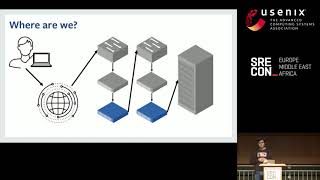
Fastly runs CDN POPs on commodity racks (32 machines, 768 GB RAM, ~24 TB SSD per POP) and hits ~700k RPS across two racks by pushing routing and load‑balancing into servers: 2.5 million BGP routes per server, ECMP from switches, and no load balancers. Varnish handles request logic and a kernel/mark-based API chooses upstreams; ARP/MAC sharding and fake MACs enable graceful failover and connection preservation, and the design proves resilient despite observed transient packet‑loss spikes (~3.1%). distributed routing Varnish
AI-written summary · about
chapters (6)
- 0:00Start
- 2:33Artur Birdman
- 10:20Criteria for Jan 5 Design
- 23:14What Happens When You Reset All the Tcp Connections
- 24:42Graceful Failover
- 25:26Distributed Load Balancer
related talks
 43mBe Like Netflix - Building a CDN from Scratch
 23mBalancing on the Edge: Transport Affinity without Network State
 31mLive Q+A 1
 05mJump-starting back-office connections
 37mResiliency Practices in Managing CDN (Content Delivery Network)
 39mLoad Balancing Building Blocks
 16mFast ACS: Low-Latency File-Based Ordered Message Delivery at Scale
 04mLoad balancing through the years