.NET Microservices in Real Life
summary
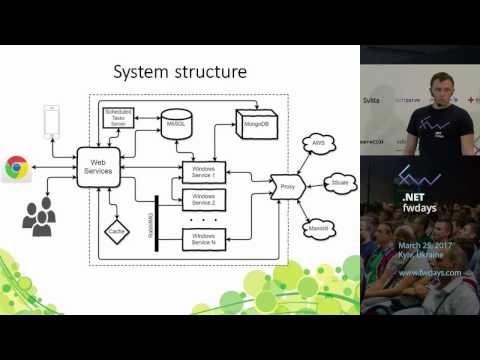
A live .NET microservices stack that handles ~200k transactions/day (peaks ~100 req/s) is described, using SQL for transactional data and MongoDB for documents. It covers background workers, ETL/reporting replicas and a file antivirus-scanning pipeline that became a performance bottleneck, and explains use of load balancers, Swagger, Hangfire (instead of Quartz), tokenized keys with a custom data-protection provider, which components caused latency and how each workaround performed.
AI-written summary · about
chapters (8)
- 0:00Welcome
- 3:14Financial project architecture
- 10:35Load balancing infrastructure
- 17:49Performance optimization & databases
- 25:48Monitoring, logging & errors
- 31:52Microservice organization & interaction
- 35:08Deployment infrastructure & processes
- 37:45Security & antivirus scanning
related talks
 53mMicroservices from the Trenches. When Buzzwords Don't Make Your Application Work
 58mMicroservices at Scale - ASP.NET Core, Service Fabric, and Azure in production
 45mAvoiding Microservice Megadisasters
 56mMicroservices from the trenches
 55mPatterns and practices for real-world event-driven microservices
 41mArchitecting Business-Driven .NET Microservices in the Cloud
 38mPatterns and Practices for Real-world event-driven microservices
 53mHow do we build high‑load microservices