Unlocking The Secrets Of TLS

summary
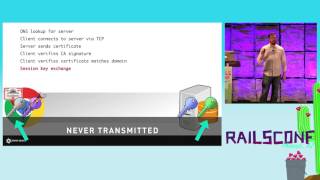
Explains why the old RSA key exchange fails: if a server private key is ever exposed (Heartbleed 2014 or compelled disclosure like the Snowden-era cases) recorded traffic becomes decryptable. Describes the working Diffie‑Hellman solution (2008) and why modern ECDHE gives forward secrecy so past sessions stay safe even if keys leak; notes TLS 1.3 (2018) mandates it. Urges early testing of post-quantum primitives (available in cutting‑edge Chromium and Cloudflare) because adversaries can record today and decrypt later.
AI-written summary · about
chapters (14)
- 0:00TLS introduction and use
- 3:55Ancient secure communication
- 9:49Secure internet challenge
- 11:34Asymmetric encryption in TLS
- 14:45RSA key exchange flaw
- 18:58NSA compromise of LaCie Bit
- 21:05Heartbleed bug impact
- 23:15Diffie-Hellman key exchange
- 31:19Forward secrecy importance
- 35:09Forward secrecy mandatory
- 36:33Quantum computing threat
- 39:28Q&A: Certificates
- 41:35Q&A: Signing certificates
- 43:44Q&A: Post-quantum testing
related talks
 55mUnlocking The Secrets Of TLS
 14mJust the Cryptography You Need to Know for TLS
 36mThe Art & Craft of Secrets: Using the Cryptographic Toolbox
 19mWhat's happening in TLS (transport layer security)?
 01h 26mTLS Cryptography for Programmers
 44mSSL/TLS for Mortals
 39mSSL/TLS For Mere Mortals
 44mCryptography in the age of Heartbleed