Gateway Architecture 3.0

summary
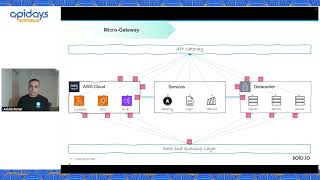
Argues that modern messaging gateways move from orchestration to choreography, use partitions and a router layer to scale thousands of endpoints, and treat edge nodes as a broker mesh with embedded brokers close to apps. Describes concrete primitives: transmission queues, batch queues (one‑time use that wait for full load), and a separate retry letter queue vs dead letter queue for non‑recoverable messages. Recommends strict per‑tenant policies, self‑service routing maps, two‑way SSL for auth, and health‑check‑based observability to reduce ops touch.
AI-written summary · about
chapters (12)
- 0:00Welcome
- 1:49What is a messaging gateway
- 3:54Speaker background
- 6:41Gateway 3 goals
- 10:11Broker mesh and routing
- 12:17Batch queues and efficiency
- 14:24Routing without complexity
- 16:06Dead letter queues
- 18:58Enterprise challenges
- 22:29Quick wins for deployment
- 24:35Security and monitoring
- 26:20Need for messaging tools
related talks
 18mGateways are All You Need
 24mTransform Your Network: Master API Control & Security
 32mNavigating Modern API Platforms: Insights & Strategies
 46mAPI Gateway Recipes: Solutions for Operation, Integration & Security
 28mAPI Gateway: critical component of your digital architecture
 19mMastering Multi-API Gateways: Strategies for Scale, Security & Success.
 21mThe Evolution of Traffic Routing in a Streaming World
 14mArchitecting Secure and Scalable Integration Platforms for FinTech