Securing Your Xen-Based Cloud

summary
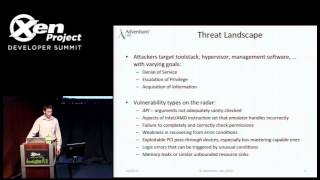
Xen uses split drivers, PV versus HVM modes, and optional isolation features to reduce exploitable surface: enable driver domains to move NIC/PCI drivers out of Dom0, use PV-grub (Fedora ships pvgrub image; Debian users must build) to avoid Dom0 pygrub parsing, and run qemu device emulation in per-VM stub domains so an exploit needs two bugs instead of one (three qemu exploits were published in two years). Compile and apply the flask example policy (4.3 run in warning mode first). IOMMU/IRQ remapping is required; disaggregation often improves scalability.
AI-written summary · about
chapters (8)
- 0:00Introduction
- 1:03Agenda
- 9:07Network Path
- 15:52PVGRUB
- 19:49attack surface
- 25:00flask
- 26:04Summary
- 26:31Questions
related talks
 28mSecureServe: Multi-level Secure Server Virtualization Platform
 22mVirtualization with Zephyr & Xen for Embedded Safety Systems
 43mFreedom, security and the cloud
 39mThe Hypervisor Hierarchy: Why Architecture Matters for Performance, Security, and Flexibility
 40mDom0less and Deterministic: Building Safer Automotive Systems With Xen
 53mXenpwn: Breaking Paravirtualized Devices
 34mIn-Guest Mechanism to Strengthen Guest Separation
 33mZephyr‑Based VIRTIO Backend on Xen: Toward Open Source Functional Safety