From Perimeter to Zero Trust: Securing Kubernetes with Paralus

summary
Paralus claims to enforce Zero Trust for Kubernetes by providing controlled, audited access and eliminating firewall port changes; the demo shows a Helm install, adding three CNAME records for domain routing, importing a minikube import cluster via a downloaded bootstrap and seeing a relay agent check-in, running kubectl from the browser, and integrating via GitLab OAuth. It enforces RBAC at project/group level (read-only yields an immediate forbidden on writes), supports instant revocation, and produces automatic audit logs.
AI-written summary · about
chapters (10)
- 0:00Start
- 1:11Agenda
- 2:04Evolution of Software Security
- 6:53Native Security Mechanisms in Kubernetes
- 9:43Pitfalls With Native Mechanisms
- 13:01What Is Zero Trust?
- 14:16Principles of Zero Trust
- 16:16Implementing Zero Trust in Kubernetes
- 19:44Features Of Paralus
- 29:06Be A Part of Paralus
related talks
 26mSecuring Access to Kubernetes Infrastructure with Kubernetes Zero Trust Principles
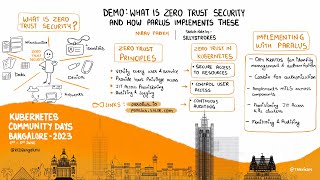 21mWhat is zero trust security and how paralus implements these
 23mEnhanced Security for Multi-Tenant Architectures: Key Components and Best Practices
 45mZero Trusting as a True Cloud Native Dev
 06mSponsored Keynote: Kubernetes is the Perfect Platform for Enforcing Zero Trust Security
 01h 02mIntroduction to Zero Trust Security
 46mZero Effort Zero Trust K8s Security for Blocking Zero Day Attacks
 28mClosing the Loop: Applying Least Privilege and Ensuring We Did It Well