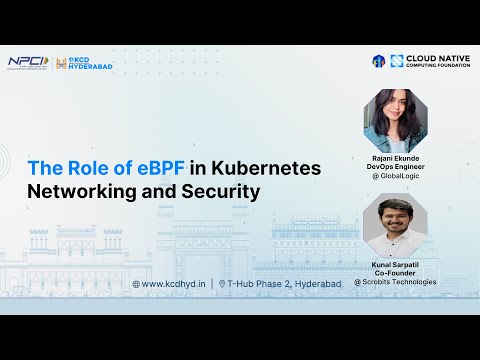
Role of eBPF in Kubernetes Networking and Security
summary
eBPF runs inside the kernel to speed packet processing, enable on‑the‑fly kernel‑level load balancing and service discovery, and enforce pre‑processing security checks and network ACLs; observability comes from real‑time connection logs and metrics. Demo uses Cilium network policy to allow a b‑box to port 80 and deny an unauthorized box, but a policy label misconfiguration lets the deny rule fail. Challenges include a steep low‑level learning curve, compilation/memory overhead, and risk of kernel crashes.
AI-written summary · about
chapters (10)
- 0:00Introduction
- 1:15What is BPF
- 3:30eBPF architecture
- 6:22eBPF in Kubernetes networking
- 8:04eBPF for security and observability
- 9:09eBPF challenges
- 11:56eBPF best practices
- 12:39Cilium tool
- 14:30Demo: Cilium Network Policies
- 20:22Conclusion
related talks
 47mUsing eBPF to Bring Kubernetes-Aware Security to the Linux Kernel
 23mAn Intro to eBPF with Go : The Foundation of Modern Kubernetes Networking
 30mObservability in Kubernetes: Unlocking the Power of eBPF
 36mPanel: Exploring eBPF Use Cases in Cloud-Native Security
 29mBuzzing Across the Cloud Native Landscape with eBPF
 40mPanel Discussion: eBPF: A New Era in Cloud Infrastructure Tools
 05mLightning Talk: Back to the Future with eBPF
 28mLessons from Building Scalable Network Policy Enforcement with eBPF