Reactive web services

summary
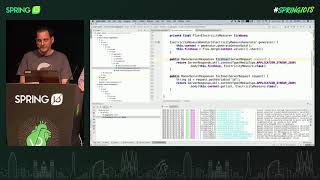
Live code shows Spring WebFlux with Reactor and Netty, plus servlet 3.1 async and a simple siege benchmark: a blocking endpoint returns ~1s latency and 5 TPS with 5 concurrent clients, hitting a thread-pool bottleneck; moving blocking work off request threads restores throughput. Blocking Netty event loops on a 4‑core laptop caps throughput (≈40 TPS) until using subscribeOn schedulers. Streaming large 1GB documents as a Flux (not a JSON array) drops heap needs from 9GB to 1GB and lowers latency, while backpressure via Flux stream requires streaming queries (Hibernate stream or JDBC cursor) or careful request(n)/batching to avoid materializing all rows.
AI-written summary · about
chapters (6)
- 0:00Start
- 0:32About Myself
- 19:43Spring Magic
- 24:30Document Repository
- 31:28Hibernate Implementation
- 33:06Jdbc Implementation
related talks
 40mREACTIVE A New Hope! Learn From a Performance History
 46mGet Reactive! Programming, Systems, and Microservices
 40mReactive programming: lessons learned
 15mReactifying your application
 59mEfficient web apps with spring boot 2
 47mSpring Boot 2.0 Web Applications
 34mReactive Architecture
 41mHandling billions of events per day with Kotlin Coroutines