How expert programmers think about errors

summary
Experts treat errors as information: they wait instead of immediately swatting a bug, build errors into code to test the test harness, and use unexpected failures as lenses into assumptions. Teams practice pair debugging, combine multiple tools, and deliberately seek falsification rather than confirmation. Triage tolerates low‑impact defects while documenting rationale, and deliberate compromises create space for progressive improvement. Decades of observation show these concrete practices — the methods, tool mixes, and social routines — lead to earlier detection, richer diagnoses, and fewer hidden design flaws.
AI-written summary · about
chapters (9)
- 0:00Intro
- 0:18experts see error as opportunity
- 1:50active error
- 2:46minding the gaps
- 3:21attending to contrary evidence
- 4:11understanding by breaking
- 6:06tolerating
- 8:50experts use disciplined practices that are socially embedded and reinforced
- 9:31contrasting multiple perspectives
related talks
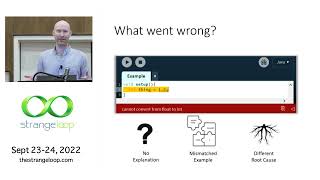 06mHow Automated Tools Can Communicate Effective Strategies for Fixing Bugs
 20mDebugging: Techniques for Uncertain Times
 45mThe design of error
 35mDebugging the Mind: A Programmer's Guide to Critical Thinking
 31mThe Science and Magic of Debugging
 54mDebugging Effectively
 23mSkills for debugging complex problems
 38mFrom the Exorcist to Hercule Poirot