A Developer’s Survival Guide for the Microservices Era

summary
Moves category and product pages into a new PHP frontend that serves pre-rendered HTML snippets from a key‑value store after asking a search engine for product IDs, hitting time‑to‑first‑byte around 30 ms. Introduces an HTTP cart service that proxies Magento so the new frontend is independent, requires API and data‑structure versioning, and uses Docker with custom base images and ansible‑container. Builds a tiny 500‑LOC framework, enforces boundaries with defend, and reports that services cut frontend friction but add ops complexity.
AI-written summary · about
chapters (13)
- 0:00Start
- 9:10MICROSERVICES ARE AUTONOMOUS
- 12:4766 LOOSELY COUPLED
- 14:49A REAL WORLD USE CASE
- 27:22CHOOSING A FRAMEWORK
- 29:19PSR-7 HTTP MESSAGE INTERFACES
- 30:10YOU DON'T NEED TO WRITE EVERYTHING YOURSELF
- 32:22AUTOMATING DEPLOYMENT
- 32:42DO NOT RELY ON THIRD-PARTY IMAGES FROM DOCKER HUB
- 33:07BUILD YOUR OWN DOCKER IMAGES
- 35:24VERSIONING YOUR API IS CRUCIAL
- 37:48DO YOU REALLY NEED MICROSERVICES?
- 39:34COMPONENTIZED CODE OVER COMPONENTIZED SYSTEMS
related talks
 34mLevel up with a Microservices architecture
 13mMicro Frontends Without Chaos: Architecture That Survives Scale
 01h 07mMicroservices from the Trenches. A Guide through the Architecture, Design, Code
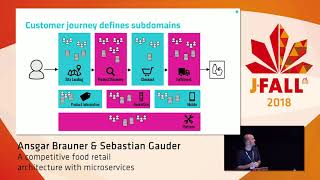 51mCompetitive retail architecture with microservices
 46mMicro Frontend: the microservice puzzle extended to frontend
 45mModularity at the (micro)service of Orange's customer space
 01h 06mA High-Performance Solution to Microservices UI Composition
 18mSoftware Architectures Gone Wild