When hardware attacks scale
summary
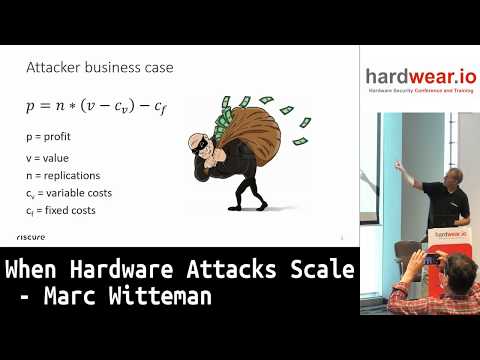
Shows that physical modification and chip forensic work turns offline hardware weaknesses into internet-scale fraud: attackers extract private key from a set‑top box PCB by peeling stickers, opening serial console and dumping flash, then forge firmware signatures to push arbitrary code; criminals use 2D‑printed cloned cards and slight plastic alterations to make stolen EMV cards pass terminals; hobbyist rigs like a Raspberry Pi decoder sharing millions of pay‑TV subscriptions demonstrate hardware tricks scale to huge financial impact.
AI-written summary · about
chapters (23)
- 0:00Introduction to hardware security
- 1:15Why hardware attacks matter
- 2:38Hacker motivations and profit
- 4:26Three real-world attack examples
- 5:28Banking card fraud explained
- 7:16Electronic point of sale attacks
- 8:18Contractor network breaches
- 10:08PayTV cardsharing schemes
- 12:34Retail and cardsharing costs
- 15:28Scalability of attacks
- 16:52Identification vs exploitation
- 18:18Black box vs white box testing
- 21:50Software vulnerabilities growth
- 24:21Reverse engineering challenges
- 26:06Binary code access barriers
- 28:14Hardware attacks for software access
- 28:56System on a chip vulnerabilities
- 31:25Binary verification flaws
- 33:33Hardware backdoors in development
- 34:15Scalable attacks and replication
- 36:23Timing and reaction margins
- 37:51Defending against hardware attacks
- 38:53Responsible disclosure limits
related talks
 45mKeynote: How to Build Hardware Trojans
 01h 03mHack To Discover Weaknesses In A Series Of Smartcards
 44mSilicon Under Attack Physical Exploitation Of Modern Chips
 51mA Measured Response to a Grain of Rice
 45mATMS how to break them to stop the fraud
 33mHacking Next-Gen ATMs: From Capture to Cashout
 27mProtecting Data In-Use from Firmware and Physical Attacks
 24mIf They Can Touch It, They Own It: The Stories We Tell...