What if Shakespeare Wrote Code?

summary
Argues that Shakespeare encodes meaning the way good documentation does, using iambic pentameter and sparse direction so deviations signal intent (Hamlet’s extra beat equals emotional disarray), points out raw counts—39 plays, 154 sonnets, ~1,700 coined words—and demonstrates with a live volunteer staging where single-line parts and the stage cue naked weapon prove text-driven action. Compares to Da Vinci’s notebooks as repeatable scientific notes and pushes concrete fixes: give context, apprenticeships, internships, and line-level examples for onboarding.
AI-written summary · about
chapters (18)
- 0:00Introduction and welcome
- 1:47Shakespeare’s mysterious gap
- 3:57Shakespeare’s wordplay and meaning
- 5:23Volunteers for live play
- 12:00Live performance of Romeo and Juliet
- 15:39Stage directions in Shakespeare’s texts
- 16:01Iambic pentameter explained
- 18:10Hamlet’s speech and emotional cues
- 19:57Consistency in documentation
- 20:20Leonardo da Vinci’s artistic genius
- 25:18Artists blur logic and expression
- 27:24Code as human expression
- 28:07Focus on humans not machines
- 28:53Tech job market challenges
- 30:17Advocating for new developers
- 31:00Connect on LinkedIn
- 32:01Context in documentation and mentorship
- 35:57Q&A and closing remarks
related talks
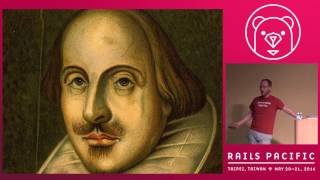 34mWhat if Shakespeare Wrote Ruby?
 36mShall I Compare Thee to a Line of Code
 36mInfinite State Machine Poetry in, with, and by Clojure
 47mMeditations on Code As Art
 08mWriting {{‘poems that change’, ‘chance poems’, ‘dynamic poetry’}}!
 01h 04mThe Art of Code
 46mMeditations on Code As Art
 35mCoding: Art or Craft?