Real-Time Communication for Everyone

summary
Claim: modern browsers can do peer-to-peer video, voice and arbitrary data with no plugins. Demonstration shows a multi‑person chat room running in Chrome and on a Nexus 7 and even across public Wi‑Fi at Buffalo Wild Wings, so the demo actually works. Key APIs used are getUserMedia, RTCPeerConnection and RTCDataChannel and real deployments rely on STUN/TURN/ICE for connectivity. Browser support is current in Chrome/Firefox/Opera, not yet in IE/Safari, and the talk cites a projection of 6.2 billion endpoints by 2018.
AI-written summary · about
chapters (22)
- 0:00Start
- 2:51Amazon Kindle Mayday Button
- 3:24Google ChromeCast
- 7:58The SDP debate...
- 11:03Ladies and Gentlemen, The WebRTC APIs
- 11:38MediaStream
- 13:58RTCDataChannel
- 16:46RTCPeerConnection, under the hood
- 17:20Initiating a peer connection
- 18:56The full WebRTC environment
- 19:17Architecture of a WebRTC app
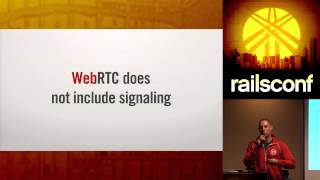
- 19:38WebRTC app, with signaling
- 21:22Introducing STUN, TURN and ICE
- 21:36Establishing Peer Connections: An Overview
- 22:36How STUN servers work (sometimes...)
- 23:25Interactive Connectivity Establishment (ICE)
- 25:35Some ready-to-use services
- 26:38The DIY approach
- 29:30Resources
- 31:09Potential of WebRTC
- 31:59What's the biggest barrier to WebRTC adoption?
- 33:03communication on the web!
related talks
 34mReal-time Communication – for Everyone!
 33mWebRTC Change Communications Forever
 53mThe State of WebRTC
 27mWebRTC: Real-Time Communications
 31mWebRTC: Real-time communication without plugins
 55mReal Time Data
 38mReal-time Communication on Mobile
 46mWebRTC: Let’s Revolutionize Information Sharing in the Browser