Video analytics at scale: Deep Learning, Computer Vision, ML & Spark

summary
A video-analysis pipeline called nash Azure marketplace is built and published within two months, running on Azure AD, Blob Storage, Databricks containers, Elasticsearch and Postgres; object detection uses MXNet/Gluon ResNet with plans to move to EfficientDet, yielding measured per-frame detection differences of 40 ms vs 24 s per frame (GPU vs CPU) but end-to-end gains are limited by CPU trackers and lack of batching. Postprocessing spends 12 minutes correction of a 30-minute job; swapping trackers to FairMOT 10x speedup on CPU reduces tracking cost. Remaining gaps: timestamped anomaly mapping, Databricks GPU image support and batching.
AI-written summary · about
chapters (5)
- 0:00Start
- 0:22Blueprint
- 15:47Lessons learned & roadmap 1
- 27:32Lessons learned & roadmap 4
- 31:12Lessons leamed & roadmap 1
related talks
 53mVideo Analytics for mere mortals with NVIDIA DeepStream SDK
 28mAccelerating Real-Time Analytics with Cosmos DB and GPU-Enhanced Serverless Apache Spark
 47mBest Practices for Real-time Intelligent Video Analytics
 01h 00m5 Levels of AI in Microsoft Azure
 32mThe ML system endeavors
 24mHow to build next-gen AI services with NVIDIA AI on Azure Cloud
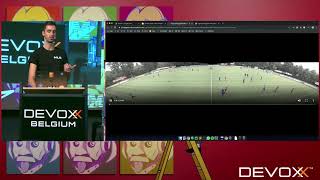 51mVideo Analytics for Football games
 19mAzure-enabled vision AI with NVIDIA AI Enterprise and Jetson