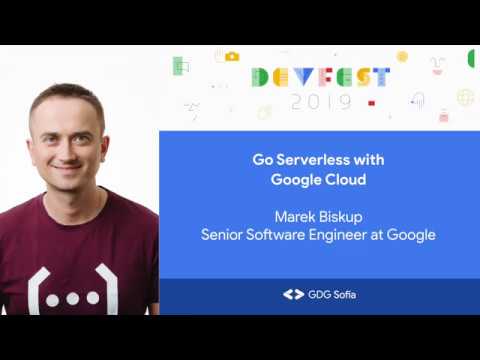
Go Serverless with Google Cloud
summary
Overview of Google Cloud serverless with concrete claims and tools: App Engine handles 300 billion requests per day and offers versioning and traffic splitting; Cloud Functions (the product behind Cloud Functions = Firebase Functions) started in Warsaw, is GA, and is best for event-driven work like an SMS-to-joke webhook via Twilio; Cloud Run runs custom containers, is compatible with Knative, and supports concurrency. Explains cold starts, long-lived container instances, memory/concurrency tradeoffs, how billing differs between App Engine, Cloud Functions and Cloud Run, and tips to reduce cold-start latency.
AI-written summary · about
chapters (26)
- 0:00Introduction
- 2:09Serverless
- 3:23Example
- 3:57How to build
- 4:45Complex architecture
- 5:22Complex architecture is easy
- 5:52Principle of serverless
- 7:37Architecture layers
- 9:17Functions
- 10:46App Engine
- 11:59Language support
- 13:59App Engine traffic
- 14:51Cloud Functions
- 16:55Cloud Functions Events
- 19:11Cloud Functions Deploy
- 19:40Simple Application
- 22:55Cloud Run with Nodejs
- 25:09How it works
- 26:49Containers are longlived
- 28:02Instances
- 29:01Execution Environment
- 29:49Code Execution
- 33:33Split Code
- 35:23How to pay
- 41:19Next steps
- 42:37Questions
related talks
 42mNew serverless solutions on Google Cloud for functions, apps and containers
 41mServerless Compute on Google Cloud: What's New
 34mServerless Computing with Python
 43mWhat's new in Google Cloud Serverless
 43mGoogle Cloud's new serverless features
 38mGCP Serverless Updates
 40mWhat's new in Google Cloud serverless
 38mServerless tools for machine learning, big data and app backends