The State of Rust Web Frameworks: Pros, Cons & Use Cases

summary
Rust is pitched as offering C/C++ performance with memory safety and no GC, claiming lower hardware cost and fewer runtime errors; tooling highlighted includes Cargo rustfmt clippy and the Tokio/Tower stack; backend options compared are Actix-web Axum Rocket with Actix topping benchmarks and Axum promising ergonomic Tokio integration; front-end via WASM uses Yew Leptos Dioxus, and a full‑stack Rust app (Yew front end + Rocket back end) is presented as working in practice.
AI-written summary · about
chapters (15)
- 0:00Rust in web dev
- 1:26Rust philosophy
- 3:59Rust tooling strengths
- 5:25Rust for backend
- 6:08Popular Rust frameworks
- 8:38Rust and WebAssembly
- 10:02Yew and Leptos
- 12:10Rust web opportunities
- 13:36Learning Rust via web
- 15:24Q&A: AI and Rust
- 18:35Q&A: Rust startup difficulty
- 20:22Q&A: Rust vs JavaScript
- 21:28Q&A: WebAssembly efficiency
- 22:30Q&A: Building community
- 26:10Closing remarks
related talks
 25mWTF, Rust for Web Development??
 01h 00mThe Future of Rust Web Applications
 36mWeb development with Rust, is it ready? Is it even useful?
 26mJavaScript Won the Web, Rust Is Taking the Critical Path
 25mThink About Front-end Web Development with Rust
 42mBuilding a Web Application with Rust
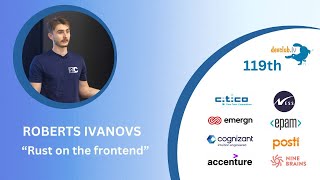 38mRust on the frontend
 12mWhy you should be checking out Rust