A Cognitive Framework for Self-Adjusting Systems Through Experience Feedback.
summary
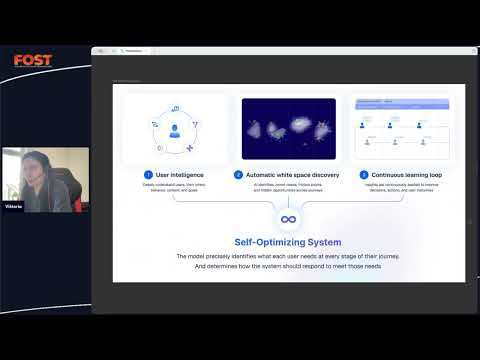
A hierarchical intent layer plus a central decision fabric (business logic, admissibility service, decision registry) routes bounded agents that only execute constrained workflows, so LLMs are used selectively for summarization and context enrichment. Implementations in travel and a SEPA banking platform report reduced hallucination risk, 70–80% compute and LM usage reduction, governance headcount falling from ~60 to ~7, and a self‑optimizing loop that discovers product white spaces and prioritizes feature or product rollout.
AI-written summary · about
chapters (12)
- 0:00AI fails in real systems
- 2:55Controlled autonomy architectures
- 4:20Intent systems and intelligence
- 7:29Self-optimizing systems
- 9:56Decision fabric and strategy
- 12:26Compute efficiency with AI
- 13:49Regulated vs open market AI
- 15:39AI sovereignty and compliance
- 17:26Banking and healthcare use cases
- 19:10AI assistance for personas
- 20:34ROI and benefits
- 21:18Real-time decision intelligence
related talks
 11mLLM Agents as Co Pilots for Scalable Decision Systems
 24mBuilding Real-Time AI Decision Systems with LLMs
 29mCustomizing and Evaluating LLMs, an Ops Perspective
 56mHerding LLMs: Predictable Outcomes from Unpredictable Agents
 13mHarmonising LLM Agents for Real-World Market Intelligence:[...]
 15mThe 85% Beyond the Model
 47mGive Your LLMs a Left Brain
 20mBuilding Reliable LLM Systems