Microservices and Continuous Delivery at the BBC
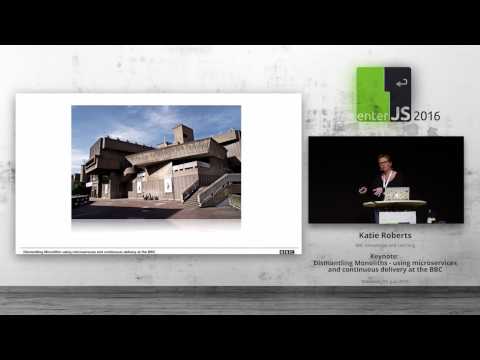
summary
BBC migrates legacy monoliths to microservices by building concrete shims and APIs rather than rewriting everything. Key tools: Heston shim (Node.js) sits between PHP apps and DynamoDB, Einstein service for Bitesize aggregates cached content into JSON for the mobile app. CI/CD runs on Jenkins and GitHub, deployments on AWS with autoscaling (spikes to ~6,000 req/s observed), two to three releases per day, a weeklong feature cycle target, and BBC Food serves ~2 million weekly users with 245 chocolate cake recipes.
AI-written summary · about
chapters (10)
- 0:00Introduction and speaker background
- 3:22Why move to continuous delivery
- 5:08What is continuous delivery
- 11:48How we manage continuous delivery
- 16:02Case study: BBC Food migration
- 25:20No more tears approach for BBC Food
- 31:50Strangler pattern explained
- 32:10Case study: BBC Bitesize companion app
- 37:52Future directions and microservices
- 39:01Q&A
related talks
 11mChanging Ops And Dev Culture At The BBC
 42mMicroservice Pipeline Architecture
 27mMicro-transformation
 24mMicroservices in Practice
 30mHow Go Helped Accelerate Software Delivery at the BBC
 23mOn the road from Monolith to Micro
 40mMicroservice Continuous Delivery
 29mMoving from A and B to ~150 microservices, the journey and learnings