The Social Coding Contract
summary
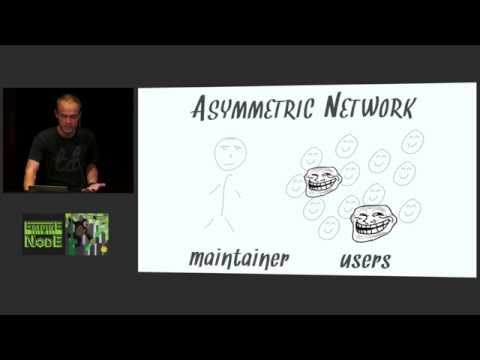
Argues that convenience breeds long-term fragility with concrete examples: Ruby apps jump from 50 gem dependencies to 75–100 and break after six months; npm creates deep trees that hit Windows path limits; a real incident forces a fork when a transitive package introduces a breaking API so the project owners inherit maintenance. Claims maintainer burnout is common, marketing drives adoption more than vetting, and advises sharing control early and raising communication fidelity to avoid abandoned, brittle stacks.
AI-written summary · about
chapters (25)
- 0:00Intro
- 0:48Open Source
- 2:30Ideology
- 3:09Economic Progress
- 4:22Food Inc
- 5:15Dependencies
- 7:35Progress is about adoption
- 10:40We all understand the code
- 12:12Early adopters
- 14:44Late adopters
- 18:43Marketing
- 20:35Explicit Trust
- 20:55Optimized for Adoption
- 21:23Stick Figures
- 21:36Uncertainty
- 21:54Asynchronous text
- 22:42Video chat
- 22:54Pro tip
- 23:23The future
- 23:38Rust
- 24:39Realtime Systems
- 25:48Hosted vs Embedded
- 26:40Be Careful
- 26:50My Hope
- 27:23Takeaway
related talks
 50mConscious Coupling for Anti-fragile Engineers
 35mBroken Promises in Open Source
 25mThis is why we can't have nice things!
 27mYellow Brick Code: Lessons from The Wizard of Oz on Enhancing DevEx
 32mLife As A Developer: My Code Does Not Work Because I Am A Victim Of Complex Societal Factors...
 06mThe Open Source Baggage We Carry
 01h 21mThe Story Of The Code
 17mWelcoming People (and Other Hard Problems)