Jakarta EE - Not Your Parents' Java EE
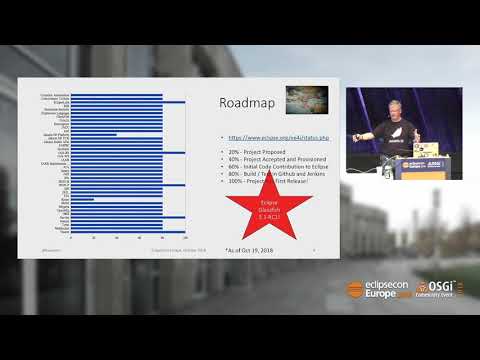
summary
Code, TCKs and reference implementations move into Eclipse while the formal specifications stall on an Oracle licensing issue, with about 39 projects already transferred and GlassFish 5.1 RC1 building entirely from Eclipse sources. TCK sources are now public in Eclipse so implementers can inspect failing tests, MicroProfile ships 1.4/2.0/2.1 and moves to three releases a year, community participation explodes (about 7,000 votes on the name, 676 mailing-list subscribers) and the process switches to an Eclipse specification workflow aiming for code-first, testable standards.
AI-written summary · about
chapters (19)
- 0:00Start
- 0:25About Me
- 2:51Jakarta EE vs Java EE
- 3:25Roadmap
- 8:33Compliance Testing
- 10:43Licensing
- 14:01JCP-Java Community Process
- 14:28JCP- Jakarta EE Working Group
- 15:36JSR - Java Specification Requests
- 16:21JSR- Eclipse Foundation Specification Process
- 18:01JSPA-Java Specification Participation Agreement
- 18:28JSPA - "Working Group" Participation Agreement
- 18:56JCP-Spec first, then code...
- 20:56MICROPROFILE
- 24:33Eclipse Foundation "teams"
- 26:20Java EE Community
- 26:55Jakarta EE Community
- 27:24Individual Community Participation
- 32:50Even More Community Participation
related talks
 34mJakarta EE: The Future of Cloud Native Java is Open!
 40mJakarta EE and Cloud Native Projects at Eclipse Foundation
 15mJakarta EE: Why and how to get involved in Open Source Software?
 50mOpening Up Java EE: Panel Discussion with
 06mInterview with
 42mWhat's Going on With Jakarta EE
 48mCloud Native Java at the Eclipse Foundation - Not your parent's Eclipse!
 32mFrom Legacy to Legendary: Jakarta EE’s Evolution in the Modern Era