Zero to production ready: a best practices process for Docker packaging

summary
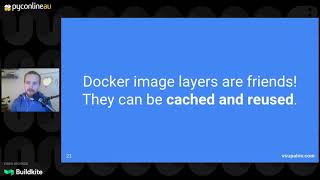
Starts with a working image and an explicit stepwise process: python:3.9-slim-bullseye base, listen on 0.0.0.0, non-root user and apt-get upgrade for security. Automate builds in CI, tag images by git branch and use docker pull plus docker build --cache-from to warm caches. Add runtime ops: FAULTHANDLER=1, exec/JSON entrypoint and gunicorn --worker-tmp-dir /dev/shm. Reproducibility via pinned deps (pip-tools), rebuilds with --no-cache --pull for updates, and optimize layers, avoid Alpine for many wheels and use --no-install-recommends and pip --no-cache-dir.
AI-written summary · about
chapters (10)
- 0:00Docker packaging basics
- 2:40Why Docker packaging is complex
- 6:11Working Docker image
- 10:40Secure Docker image
- 15:55Automate Docker builds
- 24:39Operational correctness
- 31:39Reproducible builds
- 36:50Optimize images and builds
- 41:23Beyond the Dockerfile
- 42:03Q&A
related talks
 25m0 to production-ready: a best-practices process for Docker packaging
 29mZero to production-ready: a best-practices process for Docker packaging
 16mSimplifying the Journey of Your Containerized Application from Dev to Production
 40mDocker and Python: making them play nicely and securely for Data Science and ML
 30mPython Containers: Best Practices
 51mProduction level Docker
 24mSpeeding up Your Docker Image Build
 31mDockerized app in production? YES WE CAN!!