Lessons Learned from Cultivating Open Source Projects and Communities

summary
Starts with one hard claim: scope tightly or the project becomes the Big Tent that drifts and dies. Distinguishes two models, personally-backed (you are single point of failure) and corporate-backed (company can kill or steer it). Lists concrete practices that worked: trust the community, open meeting cadence, transparent postmortems for defeats, celebrate promotions and releases, document handoff plans and simple infrastructure. Uses examples like OpenStack-Chef and CRUX as context and warns this work often burns maintainers.
AI-written summary · about
chapters (13)
- 0:00Introduction and speaker intro
- 0:23Focus on human aspects of open source
- 1:07Importance of proper project scoping
- 2:29Personally vs corporate-backed projects
- 3:33Challenges of corporate-backed projects
- 4:38Empathy for your open source community
- 6:03Open source as volunteer work analogy
- 7:48Celebrating community contributions
- 9:33Handling defeats transparently
- 10:40Maintainer burnout and support
- 11:02Trust and accessibility in communities
- 12:49Clear vision and project handoff
- 13:52Is open source worth the effort?
related talks
 25mLessons Learned from Cultivating Open Source Projects and Communities
 25mLessons Learned from Cultivating Open Source Projects and Communities
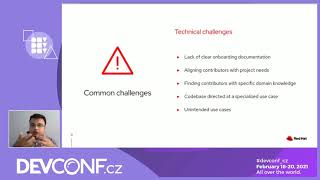 21mLeading and Growing an Open Source Comunity
 02mThe War for the Soul of Open Source
 28mBuilding Open Source Communities
 49mCommunities Over Code: How to Build a Successful Project
 34mHow to Build Collaboration and Influence Open Source Projects
 26mBuilding Open Source Communities