Doom, Gloom or Loom
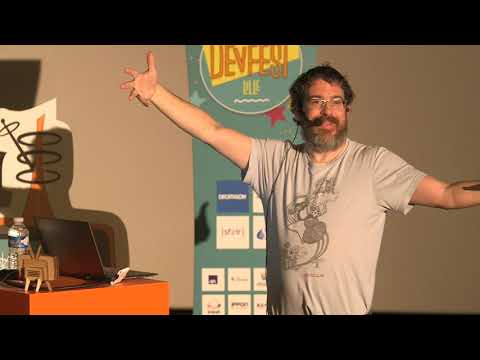
summary
Demonstrates Project Loom’s Java fibers, which yield instead of blocking, and a new java.lang.Continuation‑style API that lets traditional blocking-style Java code run asynchronously. Shows a working TCP proxy implemented with fibers, compares Kotlin’s compiled coroutines to Loom’s stack‑copying continuations, and highlights practical limits and bugs (socket-close bug in the demo, problems with synchronized and C callbacks) plus the need for JVM patches so Loom isn’t production-ready yet.
AI-written summary · about
chapters (10)
- 0:00Introduction
- 5:53Stack traces in reactive
- 9:26Thread history and limits
- 12:54C# vs JS continuations
- 13:37Kotlin coroutine demo
- 20:04Java Loom implementation
- 24:18Fibers vs threads
- 35:31TCP proxy with fibers
- 43:57Java Loom outlook
- 48:10Q&A
related talks
 01h 00mProject Loom — Friend or Foe of Reactive?
 38mReactive ❤️ Loom: A Forbidden Love Story
 46mReactive ❤️ Loom: A Forbidden Love Story
 35mEffect ful computations with Fibers
 41mExploring reactive programming in Java
 50mThinkAsync in Java8
 41mStructured Concurrency: Managing the Hierarchical Cancelation and Error Handling
 19mNext Level gRPC With Kotlin and Coroutines