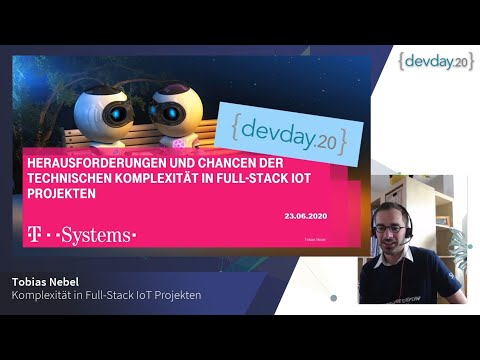
Challenges and Opportunities in Full-Stack IoT Projects
summary
Covers building full‑stack IoT systems that use microcontrollers programmed in C++ on RTOS or STM32Cube, gateways, cloud platforms (AWS or PaaS), and frontends with Java/Spring backends, Angular and CI (Jenkins/Webpack); protocols discussed include Modbus, OPC UA and MQTT. Recommends using existing ecosystem services rather than reinventing them, creating device simulators, splitting responsibilities into device/backend/frontend teams with at least two people per tech cluster, and paying attention to TLS data overhead and incident analysis tooling.
AI-written summary · about
chapters (11)
- 0:00Introduction
- 2:30What are IoT projects?
- 6:27IoT tech stack
- 8:58IoT complexity
- 13:49Architecture overview
- 17:43New technologies focus
- 21:13IoT challenges
- 25:05IoT benefits
- 29:59IoT project tips
- 36:01Pitfalls and solutions
- 37:28Summary
related talks
 20mAvoid the Silos and Help Build the True Internet of Things
 25mImplementing IoT Architectures with Open Source Software
 32mBuilding an Open Framework for Cloud Based IoT Solutions
 54mImplementing IoT Architectures with Open Source
 43mIndustrial IoT in practice
 48mHow Developers Can Prepare for IoT Standards
 44mCloud Platforms for the Internet of Things: How Do They Stack Up?
 15mWhat do I need for my IoT Cloud platform?