Building Secure AI Platform Infrastructure: A Zero Trust Framework

summary
Starts by outlining a concrete zero trust rollout: implement mutual TLS and automated certificate rotation for service identities, deploy a service mesh (STO or AWS app mesh) to enforce service-to-service auth, then add data lineage tracking and feature-level permissions to prevent poisoning. Claims a phased plan that scales training from single node to hundreds of workers within minutes, adds runtime observability (GPU metrics, loss curves), provides incident runbooks and model rollback, and reports immediate security benefits with measurable performance optimizations.
AI-written summary · about
chapters (14)
- 0:00Introduction and Speaker Background
- 0:28The Rise of AI and Security Challenges
- 2:32Zero Trust Security Model
- 3:33Core Principles of Zero Trust
- 4:19Implementing Zero Trust in AI Workloads
- 4:46Identity and Access Management
- 6:25Network Segmentation and Microsegmentation
- 7:17Data Security and Model Protection
- 9:17Runtime Security and Observability
- 11:02Phased Approach to Zero Trust Implementation
- 12:27Essential Technologies and Tools
- 16:15Regulatory Compliance and Challenges
- 18:03Future Trends in AI Security
- 19:55Conclusion and Final Thoughts
related talks
 19mSecuring AI Pipelines from Development to Production
 39mOn Establish a Production Zero Trust Architecture
 45mZero Trust: Getting to Step One..and What to Do When You Get There
 30mSecuring AI Workloads: Building Zero-Trust Architecture for LLM Applications
 08mArchitecting Transparent AI Systems for Cloud-Native Environments
 27mLeveraging Infrastructure as Code to Create Zero Trust Access to Your Apps and Infrastructure
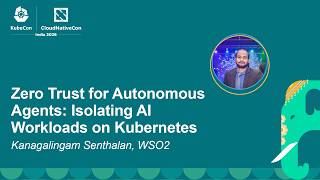 42mZero Trust for Autonomous Agents: Isolating AI Workloads on Kubernetes
 38mToward Zero Trust with AI