LLM SecOps

summary
Claims actionable SecOps steps grounded in customer work with over 50 clients and a reference architecture: build a single multi‑tenant LM backend fronted by many UIs, protect vector database storage and embedding pipelines, instrument CI/CD with SCA/DAST and secrets automation, enforce delegated access for metered models, and add detections for prompt‑injection and model poisoning. Uses open tools like LangChain and LlamaIndex, mandates end‑to‑end logging, column/double encryption for query logs, content filtering both input and output, and verifies that these measures scale without reengineering.
AI-written summary · about
chapters (10)
- 0:00intro
- 0:14introduction and speaker background
- 1:35overview of gen ai application security
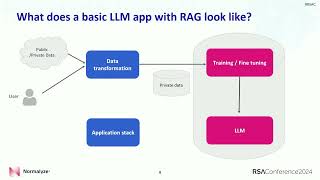
- 3:19understanding llm applications
- 5:08building and integrating llm applications
- 8:20challenges in llm application development
- 11:30security considerations for llm applications
- 15:31practical steps for securing llm applications
- 21:35tactical llm secops
- 24:27conclusion and contact information
related talks
 20mSecurity Threats in Modern LLM Applications
 15mApplying DevSecOps Lessons To MLSecOps
 47mA Step-by-Step Guide to Securing Large Language Models (LLMs)
 27mA Gentle Introduction to MLSecOps
 42mDevSecOps for AI: Introducing MLSecOps for Software 2.0
 36mLLMOps in Practice- Building Secure, Governed Pipelines 4 LLMs
 31mWhat problems should enterprises actually trust an LLM to solve?
 50mSecuring LLM-Powered Applications: Overcoming Security and Privacy Challenges