A Hitchhiker's Guide to the MLOps Experience

summary
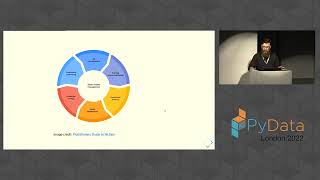
Argues that applying software development practices to ML — specifically data versioning so datasets are reproducible like code, side‑by‑side visualizations with enrichment (annotations, predictions) and one‑click exports to labeling — cuts iteration time; prescribes experiment tracking that records hyperparameters, metrics and produces stakeholder‑ready visuals; and insists on a model registry that holds metadata, comparisons and an intuitive deploy path so models can be rolled back or promoted to production without heavy DevOps.
AI-written summary · about
chapters (17)
- 0:00intro
- 0:22preface
- 2:31the current solution
- 4:08who is noa
- 5:09what is mlops
- 6:06mlops is important to ml engineers
- 6:44the main components mlops should cover
- 7:07data challenges
- 8:22data versioning
- 10:26data visualisations
- 14:08experiments challenges
- 15:22experiment tracking
- 17:29the main components mlops should cover
- 17:41models challenges
- 19:13model registry
- 21:09general ux tips
- 23:12what is your favourite mlops experience? tell me!
related talks
 40mA Hitchhiker Guide to MLOps
 01mMLOps: Applying DevOps to ML
 43mNavigating the MLOps Journey: Key Considerations for Successful Implementations
 20mBridging the gap between DevOps & MLOps
 36mIs the MLOps tooling the same as the DevOps tooling?
 20mBringing CI/CD Practices to Machine Learning with MLOps
 47mMLOps tools to automate ML deployment
 34mMLOPS 101: Tips, Tricks and Best Practices