Revolutionizing JavaScript Performance

summary
Claims measured in production: 2.29× throughput gains, 40% bundle size reduction, 60% faster load times and 3× API response improvements. Describes Node.js techniques (adaptive worker pools, connection pools, loop monitoring), frontend tactics (adaptive component rendering, memoization, lazy loading, predictive prefetching) and TypeScript patterns (decorators, type guards) for runtime integration. Emphasizes lightweight architectures with low CPU/memory overhead, multi‑objective tuning (speed vs memory vs UX), and concrete examples from retail and realtime chat.
AI-written summary · about
chapters (15)
- 0:00Introduction to the Future of JavaScript
- 0:34Understanding the Performance Challenge
- 1:20The Promise of Intelligent Optimization
- 1:57Intelligent vs Traditional Optimization
- 2:49Node.js Backend Optimization
- 3:38Frontend Optimization Techniques
- 4:22Real-World Performance Impact
- 5:10Lightweight Architecture Benefits
- 5:54Framework-Specific Optimizations
- 6:36Practical Implementation Strategies
- 7:19Industry Applications of Optimization
- 8:12TypeScript for Intelligent Optimization
- 8:47Overcoming Common Challenges
- 10:00Key Takeaways and Next Steps
- 10:38Conclusion and Inspiration
related talks
 34mOptimizing Performance in Large-Scale React & Node.js Applications
 46m10 secrets to improve Javascript Performance
 31mThe Future of Front-End Performance
 53mMastering Node.js Performance
 34mUnderstanding JavaScript Performance
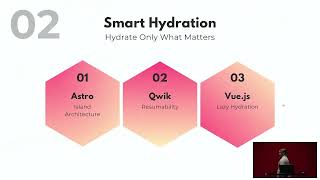 16mNeed for Speed: How Modern JavaScript Frameworks Are Solving Web Performance
 28mDecoding JavaScript: Loading Performance —
 33mWeb performance in large-scale applications