Architect's Guide to Managing a Code Base

summary
Practical claim: running a Java agent in production reveals unused code and feeds OpenRewrite to deprecate and safely remove it, with customers reporting 20–30% dead code (some see ~50%). Tools shown: SonarQube, JArchitect, NotebookLM, JMeter/Gatling, GC log analyzer (GCLA), Jitter, and a code inventory UI that integrates with OpenRewrite. The agent is low cost and nonintrusive at <1% overhead, collects first/last execution times, and supports staged removal workflows that have demonstrably reduced technical debt.
AI-written summary · about
chapters (11)
- 0:00Introduction and welcome
- 3:57Role of software architects
- 10:15Technology selection and frameworks
- 17:14Coding architects vs non-coding architects
- 25:14Software architecture patterns
- 34:26Code reviews and bug reduction
- 40:47Processes for better code quality
- 47:09Tools for code management
- 54:54Code Inventory and OpenRewrite integration
- 1:01:19AI tools for code generation
- 1:06:16Q&A and closing remarks
related talks
 44mWe Hate Code: The !Joy of Maintaining Dead Code
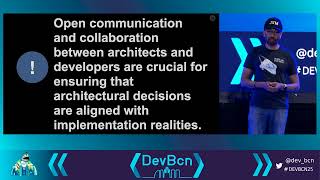 42marchitect's Guide to Managing a Code Base
 37mWe Hate Code - The !joy of Maintaining Dead Code
 54mResolving technical debts in software architecture
 49mJava's Hidden Gems: Tools and Libraries
 49mMetrics for Architects
 28mAI Agents as Architectural Strategists | Aligning System Design with Business Goals
 20mSupporting your architecture with code coverage and static analysis rules