Big data for tiny patients: Applying ML to pediatrics

summary
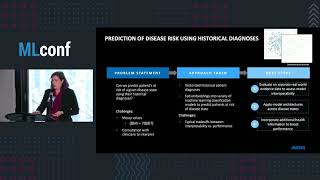
A natural language processing pipeline reads only unstructured neurology progress notes to flag children who may need neurosurgical evaluation for intractable epilepsy, detecting eligible patients about two years earlier than usual. The system runs weekly over ~6,000 neurology visits per year, achieves 82% AUC, has a low PPV because surgery is rare, and yields a number needed to screen 3.6. It is integrated into clinical workflow and bias checks show no effect from race, gender, or primary language.
AI-written summary · about
chapters (15)
- 0:00Intro
- 0:59Why is it important to do research in pediatrics?
- 3:05Are pediatric patients just tirry adults?
- 5:20Machine Learning research in pediatrics
- 8:40EHR data types
- 9:40What is big data?
- 11:11Big data in healthcare
- 13:05Machine Learning in the literature
- 14:00Applications of machine leaming in pediatrics
- 18:22Epilepsy neurosurgery candidate identification
- 19:52NLP prospective performance
- 24:00What can we do next?
- 25:10Is machine learning biased?
- 27:54What did we learn?
- 28:35What does the future hold?
related talks
 30mRevolutionising epilepsy care with AI/ML
 20mDiagnostic Medical application of ML
 44mAI in the Clinic: Prediction is Better Than Cure
 11mEnsuring Reliability in Healthcare Data Engineering
 39mBridging health inequalities through machine learning
 20mMachine Learning in Cardiology
 05mDBTB INT Sanghamitra Deb r
 42mBuilding AI That Learns and Adapts: A Case Study in MRI Diagnostics