Comparative Asynchronous Programming

summary
Compares concrete async choices for Swift and makes specific tradeoffs clear: Grand Central Dispatch underpins higher abstractions, Artsy uses DRBOperationTree on NSOperationQueue to coordinate thousands of API calls and gigabytes of images, promises (example: BrightFutures) use flatMap to eliminate nested callbacks and centralize error handling, reactive streams via RxSwift map gesture events into UI updates (five lines make a circle follow a finger), actor systems like Akka power fault‑tolerant auctions, and async/await is infeasible today because Swift lacks coroutines/generators.
AI-written summary · about
chapters (15)
- 0:00Intro
- 1:26Asynchronous Programming: Difficult and Subjective
- 1:55"Normal" programming
- 7:25Built-in Async Approaches
- 7:43Grand Central Dispatch
- 8:23NSOperationQueue / DRBOperation Tree
- 9:34Target / Action
- 10:14Callbacks/ Completion Handlers
- 10:57Callback Hell
- 15:33Callback Heaven
- 15:57Some Async Abstractions are Supported in Swift
- 17:38Functional Reactive Programming
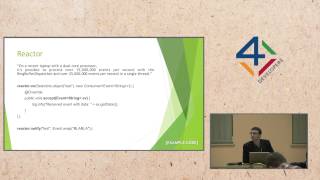
- 21:13Actor Model
- 22:54Some Async Abstractions are Impossible in Swift
- 25:34Coroutines and Generator Functions
related talks
 35mSwiftUI, Async/Await, AsyncAlgorithms: How does it all fit?
 31mFuture of Swift: A Sneak Peek at async / await
 20mIt's Critical: Concurrent programming as a sane programming model
 52mSynchronous and Asynchronous Programming - Two Worlds You Can Combine
 29mLeveraging structured concurrency in your applications
 20mHow To Approach Approachable Concurrency
 46mTour d’horizon de la gestion de la concurrence dans différents langages
 31mIs structured concurrency worth the effort?