Managing Enterprise-Class Applications with Angular6 and Schematics
summary
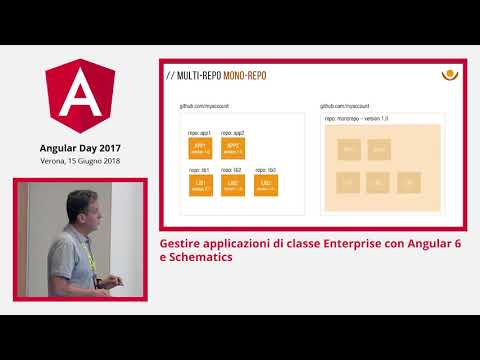
Explains how Angular 6 supports enterprise-style workspaces and mono-repos by placing multiple projects and libraries under projects instead of single apps. Demonstrates using @angular-devkit/schematics to generate code (creating a my-lib with ng build and consuming it with ng generate), using template files and naming pipes, atomic pipelines on the virtual file system, and generators that read a YAML file to produce ready-made form lists and CRUDs; also covers trade-offs, testing, and effects on versioning and incremental recompilation.
AI-written summary · about
chapters (9)
- 0:00Introduction
- 2:12Enterprise apps
- 6:06Modular architecture
- 10:59Multi-repo vs mono-repo
- 16:03Angular 6 workspace
- 25:56Angular library demo
- 33:57Code generation
- 44:40Schematic development
- 56:36Conclusion
related talks
 41mSuper scalable and robust architecture definitions for Angular at an Enterprise
 29mAutomating your Angular projects with Schematics
 28mLeverage Angular Schematics to Empower Frontend Apps & Libraries
 50mHow to leverage Angular Schematics to empower Devs of Frontend Apps & Libraries
 41mAngular Schematics - Develop for developers
 31mCustom Schematics: An Angular Application by the push of a Button...
 31mAutomated Scaffolding with Schematics (Angular)
 14mAngular Schematics for Better Productivity