The Costs of Modularization

summary
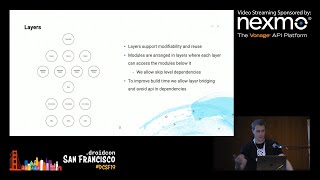
Modularization promises faster incremental and clean builds and clearer ownership but adds five real costs: designing module boundaries (three example layouts shown), enforcing conventions (migration of Compose config into a Gradle convention plugin), validating allowed deps with module-graph-assert, and centralizing versions with Gradle version catalogs plus project accessors; runtime wiring needs DI (coin/Koin) and intent-provider mediator modules or deep links for cross-feature navigation.
AI-written summary · about
chapters (8)
- 0:00Start
- 2:22Companion Project: Toys App
- 3:34Organizing Modules
- 9:56Enforcing Module Convention
- 17:10Dependency Management
- 18:17Version Catalog - Libraries & Bundles
- 23:37Navigation
- 24:47Pattern: Intent Provider
related talks
 37mModularization - flatten your graph and get the real benefits
 30mModular Android Development
 40mModularizing Android Applications
 46mFrom Chaos to Cohesion: Building Modular Monoliths in the Real World
 49mModularization at scale
 20mBreaking Down Modularization
 35mHow we brought down our build times. Modularization impact on build speeds and metrics
 27mModularising the right way