The Future is Fine-Tuned: Deploying Task-specific LLMs

summary
Claim: smaller task-specific LLMs are cheaper and production-ready. Workflow uses Ludwig for declarative fine-tuning and Lorax for dynamic adapter serving with LoRA adapters. On a 1,500-row complaints dataset a Llama 27B fine-tune trains in about 1.5 hours on four T4s and yields far better structured JSON outputs than out-of-the-box open models (33% coverage) and beats GPT‑4’s 66% baseline for this task. Lorax serves ~128 fine-tuned adapters atop one base model, cutting GPU footprint and cost while keeping latency negligible.
AI-written summary · about
chapters (17)
- 0:00Fine-tuning LLMs future
- 3:10Task-specific models beat general
- 7:22Fine-tuning challenges and multi-model serving
- 10:30Ludwig declarative training
- 13:58Lorax efficient model serving
- 18:37Live demo fine-tuning and serving
- 25:59Summary open-source tools
- 27:13Q&A Model ownership
- 29:20Q&A Latency impact
- 30:22Q&A Evaluating quality
- 31:44Q&A Inference speed
- 32:27Q&A Keeping pace with models
- 33:31Q&A Custom models and flexibility
- 34:15Q&A Open-source and smaller models
- 34:58Q&A Customer value and cost
- 36:05Q&A Fine-tuned vs GPT-3.5
- 37:50Q&A Beyond LLMs to Transformers
related talks
 29mLocal LLM fine-tuning: a practical example
 09mTailoring Llama for Your Needs: Fine-Tuning & Evaluation
 21mFrom Data to Precision: Fine-Tuning LLMs for Proprietary Query Languages
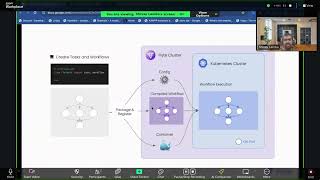 25mFine-Tuning Large Language Models With Declarative ML Orchestration
 53mLLM Quality Optimization Bootcamp
 33mFine-Tuning Large Language Models with Declarative ML Orchestration
 22mTraining a LLaMA in your Backyard: Fine-tuning Very Large...
 27mProductionizing Open Source LLMs