Single Agent vs Multi-Agent AI | Which One Should You Use?

summary
Provides a practical rule: use a 2x2 decision matrix (horizon vs complexity) and start with one agent, adding specialists only as tasks become long‑horizon and high‑complexity. Single agents beat multi‑agent systems for focused, low‑latency jobs like weather updates, document summarization, or bug fixes. Multi‑agent patterns — orchestrator hub-and-spoke, pipeline, and debate — enable parallel research, writer/reviewer pipelines, or a sales stack that scrapes leads, qualifies, drafts emails and pushes to Salesforce. Watch for costs: tokens burned by coordination, higher latency, cascading errors, and trust gaps.
AI-written summary · about
chapters (10)
- 0:00Single vs multi-agent AI
- 2:32Single agent systems
- 4:37Where single agents excel
- 7:23Challenges in single agents
- 10:51How multi-agent systems work
- 13:17Multi-agent architectures
- 18:12Where multi-agents excel
- 23:09Costs of multi-agents
- 29:56Decision framework for agent selection
- 32:49Key takeaways
related talks
 27mMulti-Agent AI: Transforming Business Operations and Value Creation
 50mScalable Innovation: Exploring Multi-Agent Systems
 37mOne agent, one job, better A
 41mPatterns & Practices for building Multi-Agent Systems
 45mAn Agent Walks Into a Bar... and Meets Another Agent: Multi-Agent Systems in Action
 34mAI Agents: Transforming Autonomous Decision-Making
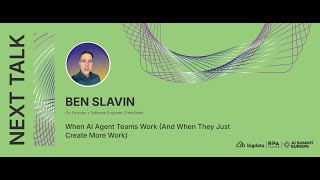 57mWhen AI Agent Teams Work (And When They Just Create More Work)
 25mAI Orchestration: Getting Super Agents to Complete a Mission